
The Difference Between Hallux Limitus and Hallux Rigidus
What Causes Big Toe Joint Stiffness
Osteoarthritis is the most common cause: gradual cartilage breakdown in the joint over time. But this condition is not limited to older patients. Risk factors include a history of big toe injury (turf toe, fractures, repeated jamming during athletics), family history of foot structural issues, an elevated or long first metatarsal bone that creates abnormal load during push-off, and certain gait patterns that chronically stress the joint.
Occupations that involve prolonged squatting or kneeling, including plumbing, flooring installation, landscaping, and farming, can accelerate progression by repeatedly forcing the joint into loaded flexion. Tight footwear that compresses the toe contributes over years as well.
Hallux limitus and rigidus are among the conditions we treat regularly. See our full conditions treated page for more on what we address at our practice.
How Hallux Limitus Changes the Way You Walk
This is where many patients realize the problem is bigger than the toe. When you cannot push off properly through the big toe, your body compensates. Weight shifts to the outer edge of your foot. Over time, this creates overloading of the smaller toes (metatarsalgia), ankle discomfort from altered mechanics, hip tightness, and sometimes low back pain from the changed gait pattern.
Footwear becomes a real limitation. Heels are difficult. Stairs feel awkward. Athletic activity gets avoided because the toe does not cooperate. Some patients notice their stride getting shorter and more shuffling as the body learns to protect the painful joint.
How Hallux Limitus and Rigidus Are Diagnosed
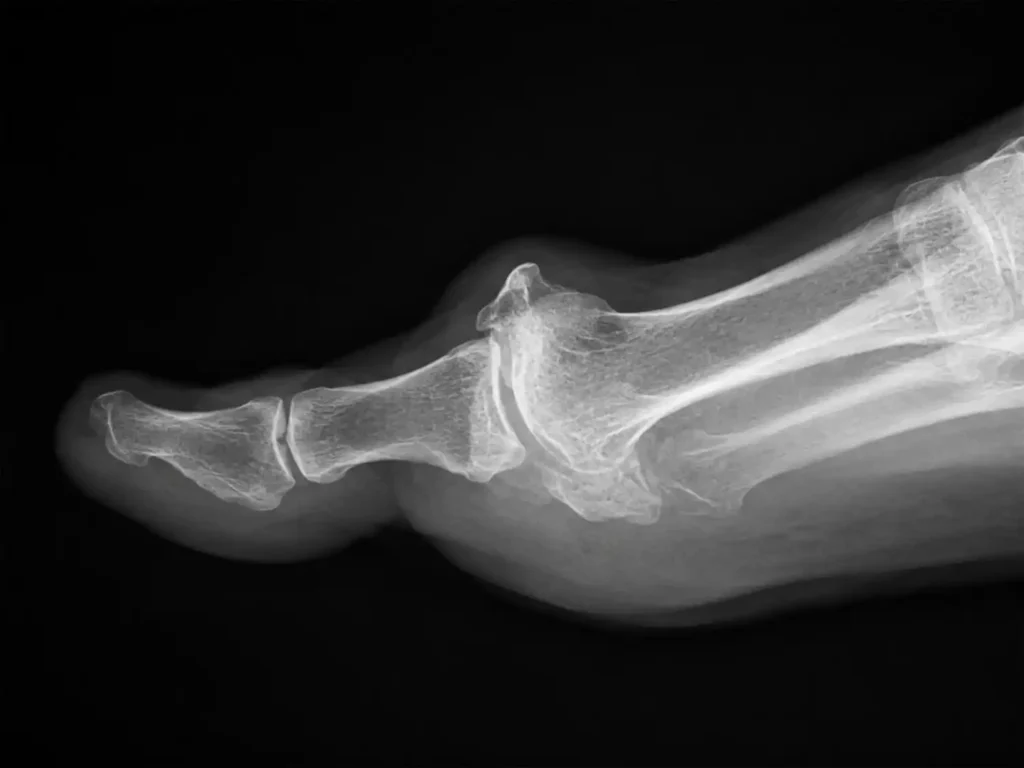
X-rays are the primary diagnostic tool. They show the remaining joint space, the presence of bone spurs, and how far degeneration has progressed. Weight-bearing X-rays, taken while you stand, are more useful than lying-down images because they capture how the joint behaves under real load.
Physical examination fills in the rest. Your foot specialist will manually move the joint through its range of motion, note where restriction or pain starts, and assess compensatory patterns in how you stand and walk. This functional assessment informs which treatment approach fits your specific situation.
Treatment Options That Work at Each Stage
Early-stage hallux limitus often responds well to conservative treatment. Footwear modification is the first step. Stiff-soled shoes or rocker-bottom soles reduce how much the joint needs to bend during normal walking. Custom orthotics with a Morton’s extension (a rigid support under the big toe) reduce joint stress and slow progression significantly.
Anti-inflammatory medications and corticosteroid injections manage pain and inflammation. For younger, active patients with early to moderate disease, cheilectomy, a surgical procedure to remove bone spurs, can restore meaningful motion and relieve pain without replacing the joint. Recovery is typically 4-8 weeks to full activity.
For advanced hallux rigidus, joint fusion (arthrodesis) is the gold standard. It eliminates pain permanently by fusing the joint in a functional position. Most patients return to comfortable walking within a few months and report significant improvement in quality of life.
If bunions are also part of your picture, learn about our minimally invasive bunion removal procedure — a related condition we often treat alongside big toe joint issues.
Big toe stiffness does not have to become a bigger problem. The sooner you get evaluated, the more conservative your treatment options. Contact Victoria Foot & Ankle Center to schedule your appointment.

Frequently Asked Questions
What is the difference between hallux limitus and hallux rigidus?
Hallux limitus is restricted big toe joint motion; hallux rigidus is near-complete loss of motion due to advanced arthritis and bone spur formation.
Can hallux rigidus be treated without surgery?
Early and moderate cases often respond to custom orthotics, footwear modification, and injections. Advanced rigidus typically requires surgical intervention for lasting relief.
Is hallux limitus the same as a bunion?
No. Bunions involve the bone shifting sideways, while hallux limitus involves restricted up-and-down motion at the joint due to arthritis.