If you have ever felt like there is a pebble in your shoe but checked and found nothing, a neuroma might be the reason. This common foot condition feels strange before it becomes painful, and many people spend months trying to figure out what is wrong before getting a diagnosis. Here is what neuromas are, why they develop, and what treating them actually looks like.
What a Neuroma Is and Why It Develops
A neuroma, most often a Morton’s neuroma, is a thickening of tissue around the nerve running between your toes, typically between the third and fourth. The nerve gets irritated, swells, and the surrounding tissue thickens as a protective response. It is not a tumor. The word ‘neuroma’ simply refers to nerve tissue growth.
Narrow shoes are the primary culprit. High heels force the toes forward and compress the nerve repeatedly. Pointy toe boxes do the same. Over time, this chronic compression leads to the thickening that creates neuroma symptoms. High-impact sports, particularly running, also create repetitive forefoot stress that can irritate the nerve even in people who wear sensible shoes.
Neuromas are one of many foot conditions we treat at Victoria Foot & Ankle Center. See our full conditions treated page to learn about other issues we address.
Neuroma Symptoms You Will Actually Feel
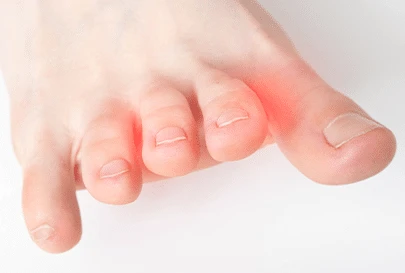
The classic description is a pebble in your shoe: a feeling that something is stuck under the ball of your foot even when nothing is there. Other symptoms include burning or sharp pain between the third and fourth toes (or second and third), tingling or numbness in the toes themselves, pain that gets worse in tight shoes or heels, and pain that eases up when you are barefoot or after removing your shoes. Some patients notice a clicking sensation when walking.
These symptoms tend to develop gradually. Certain shoes trigger them predictably; rest and wider footwear temporarily relieve them. Most patients know exactly which shoes set it off and which do not. That predictability is a useful diagnostic clue, and something your foot specialist will ask about at your appointment.
What Causes Neuromas to Form
Shoe choice is the biggest factor, but not the only one. Feet with structural issues like high arches, flat feet, or bunions create abnormal pressure distribution that concentrates stress in the forefoot. Previous foot injuries can cause nerve irritation that eventually leads to neuroma development. Occupations requiring extended standing or walking on hard surfaces contribute too, including teachers, healthcare workers, restaurant staff, and retail employees.

How Victoria Foot & Ankle Diagnoses a Neuroma
Diagnosis is typically clinical, meaning your foot specialist can usually identify a neuroma through a physical exam. We apply pressure to specific areas of your forefoot and look for reproduction of your symptoms. We also feel for the characteristic click, called Mulder’s click, that occurs when we compress and move the inflamed tissue.
Imaging is not always necessary, but an ultrasound or MRI can confirm the diagnosis and rule out other causes like stress fractures, metatarsalgia, or capsulitis. For atypical presentations, imaging gives us clarity before starting treatment.
Neuroma Treatment Options at Victoria Foot & Ankle
Most neuromas respond well to conservative treatment, especially when caught early. Wider footwear with a roomy toe box is often the first and most impactful change. Shoes that do not compress the forefoot reduce nerve pressure immediately.
Custom orthotics redistribute weight more evenly across the forefoot, reducing concentrated pressure on the nerve. Patients with structural foot issues almost always benefit from these. Anti-inflammatory medications reduce swelling in the acute phase. Corticosteroid injections target the inflamed tissue directly and provide significant relief when other measures have not been enough.
Alcohol sclerosing injections, a series of treatments that gradually shrink the neuroma tissue, show success rates of 60-80% for appropriately selected cases. Surgical removal is reserved for neuromas that do not respond to conservative care. The procedure is straightforward with a high success rate; most patients return to regular shoes within four to six weeks.
Have questions before your first visit? Our FAQ page covers common questions about what to expect.
Ready to get a proper diagnosis? Contact Victoria Foot & Ankle Center to schedule your appointment and get a clear answer about what is causing your foot pain.
FAQs About Neuroma Symptoms and Treatment
What does a neuroma feel like?
Most patients describe the sensation as a pebble stuck in the ball of their foot, along with burning, tingling, or numbness between the toes.
Most patients describe the sensation as a pebble stuck in the ball of their foot, along with burning, tingling, or numbness between the toes.
Can a neuroma go away on its own?
Mild neuromas sometimes improve with footwear changes, but most require treatment — either conservative (orthotics, injections) or surgical — to fully resolve.
Mild neuromas sometimes improve with footwear changes, but most require treatment — either conservative (orthotics, injections) or surgical — to fully resolve.
How long does neuroma treatment take?
Conservative treatment typically takes 6-12 weeks to show meaningful results. Surgical recovery is 4-6 weeks to regular footwear.
Conservative treatment typically takes 6-12 weeks to show meaningful results. Surgical recovery is 4-6 weeks to regular footwear.