
Heel Pain & Plantar Fasciitis Treatment in Victoria, TX
Plantar fasciitis is a common cause of pain under the heel, often noticed with the first steps after rest. Other conditions can cause similar pain. Dr. Matthew Eberly evaluates heel pain in Victoria, TX and recommends treatment based on the cause.
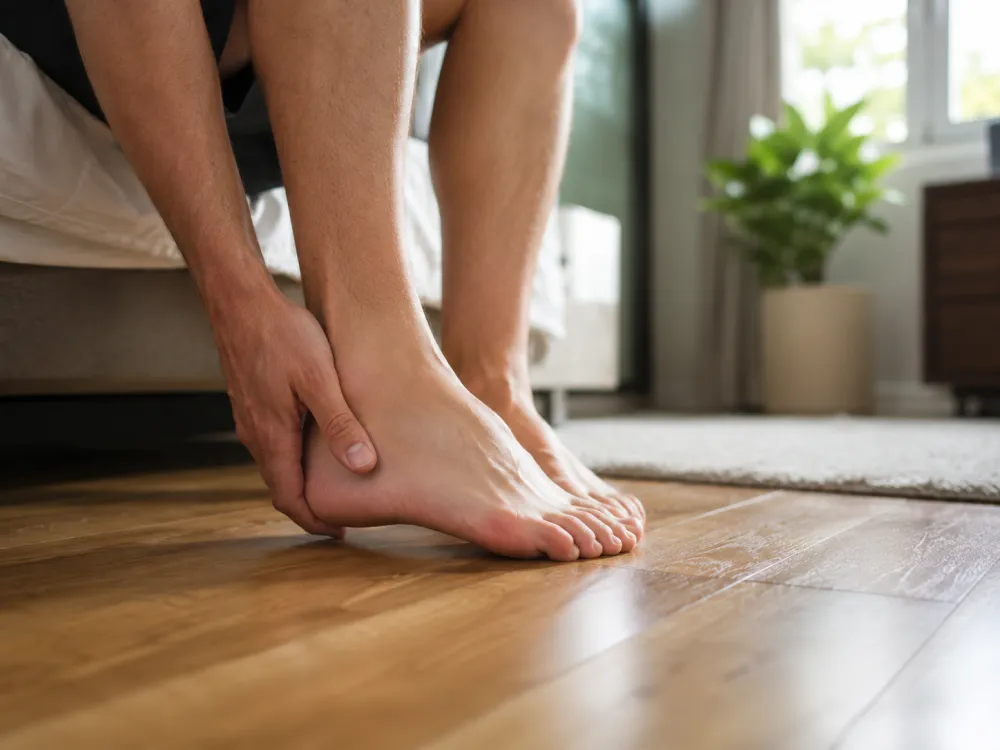
Symptoms
- Sharp pain under the heel with the first steps out of bed
- Pain that eases after a few minutes of walking, then comes back later in the day
- Pain when you stand up after sitting a while
- A tender spot on the inside of the heel that hurts when you press it
- Worse pain barefoot on tile or hardwood
- A deep ache that builds through a long shift on your feet
Burning, tingling, or numbness may suggest nerve involvement or another cause of heel pain and should be assessed.
Factors that can contribute to plantar fasciitis
Several factors may contribute, including activity changes, prolonged standing, calf tightness, and foot structure. There may not be one clear trigger.
- A new job that keeps you on your feet all day
- Adding mileage or speed to your runs
- Weight gain
- Shoes with no support, including flip-flops and flat sneakers
- Tight calves and a tight Achilles tendon
- Flat feet or a very high arch
- Concrete floors


How Dr. Eberly diagnoses heel pain
Imaging may be recommended when the diagnosis is unclear or another injury is suspected. Early stress fractures may not appear on an X-ray, so persistent concern can require further evaluation or different imaging.
Treatment
- Daily stretching of the calf and the fascia.
- Adjusting activities that aggravate pain.
- Icing the heel after you have been on your feet.
- Supportive shoes and avoiding barefoot walking on hard floors at home.
- Inserts or orthotics may be considered based on your exam and symptoms.
- Medication for pain or inflammation may be appropriate after a review of your health history and other medicines.
- A night splint may be recommended for some patients.
- Injections may be considered for selected persistent cases. Corticosteroid injections carry risks, including plantar fascia rupture. PRP is another option to discuss, but its effectiveness remains under study and costs may be substantial.
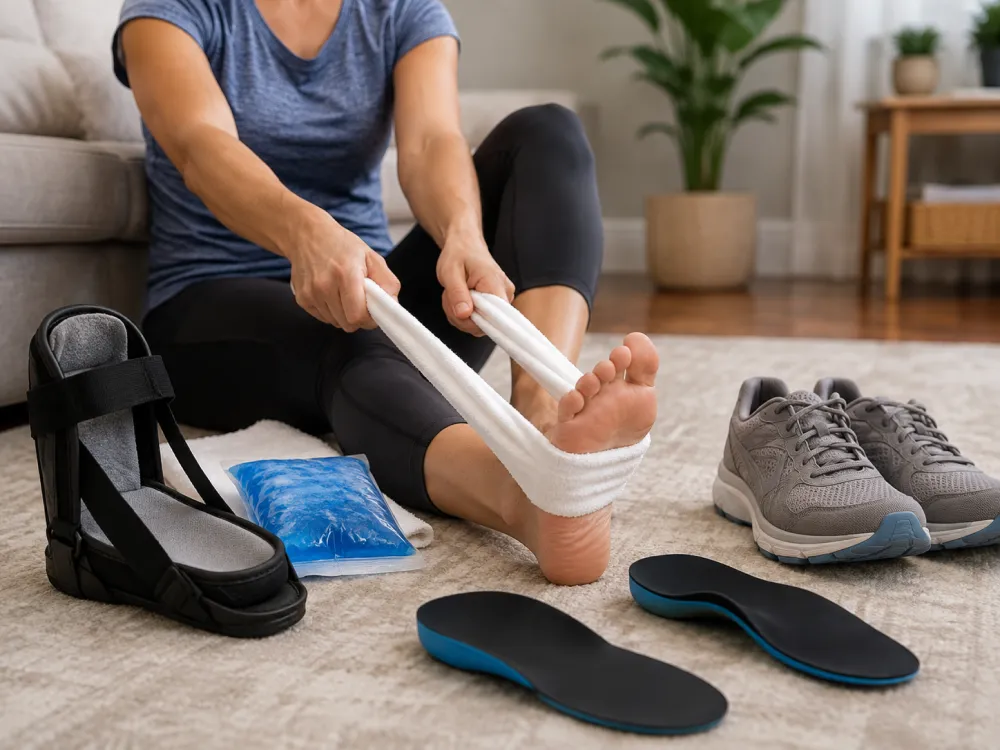

What recovery looks like
Improvement can be gradual, and the plan may need adjustment. Ask Dr. Eberly how to increase activity, how long to continue prescribed exercises or supports, and when to return if symptoms persist or worsen.
Keep following your treatment plan after symptoms improve unless Dr. Eberly advises a change.
When to see a podiatrist
- Heel pain that persists or worsens
- Morning pain that is getting worse instead of better
- Pain that is changing how you walk, work, or exercise
- Numbness, tingling, or burning in the heel or arch
- Seek prompt medical assessment after an injury if you cannot bear weight or have severe pain or swelling
- If you have diabetes or reduced sensation, contact a clinician promptly about a new foot problem rather than waiting for it to become painful
Prompt evaluation is especially important when pain follows an injury, changes how you walk, or occurs with diabetes or reduced sensation.

Book an appointment
Call 361-576-3338 (FEET) or use our online appointment request form.
Victoria Foot & Ankle Center is at 2700 Hospital Dr, Building A, Suite 101 in Victoria, TX. Dr. Matthew Eberly, DPM sees patients from Victoria, Cuero, Port Lavaca, Yoakum, Edna, and the wider Crossroads area.