
Diabetic Foot Doctor in Victoria, TX
Your feet take the hardest hit when diabetes is in the picture. Dr. Eberly provides specialized care to protect them.

Board-Certified Podiatric Care for Diabetic Patients
Diabetes doesn’t wait, and neither should your foot care. At Victoria Foot & Ankle Center, patients of all ages are seen by Dr. Matthew Eberly, DPM, a board-certified podiatrist who takes the time to explain what’s going on and what to do about it. Whether you’re managing early-stage neuropathy or dealing with a wound that won’t close, you’ll leave every visit with a clear picture of your foot health and a plan to protect it.
New diabetic patients are welcome. If you have never seen a podiatrist before or are switching providers, just call 361-576-3338 or schedule online!
Diabetic Foot Conditions We Treat

Diabetic Neuropathy

Diabetic Foot Ulcers
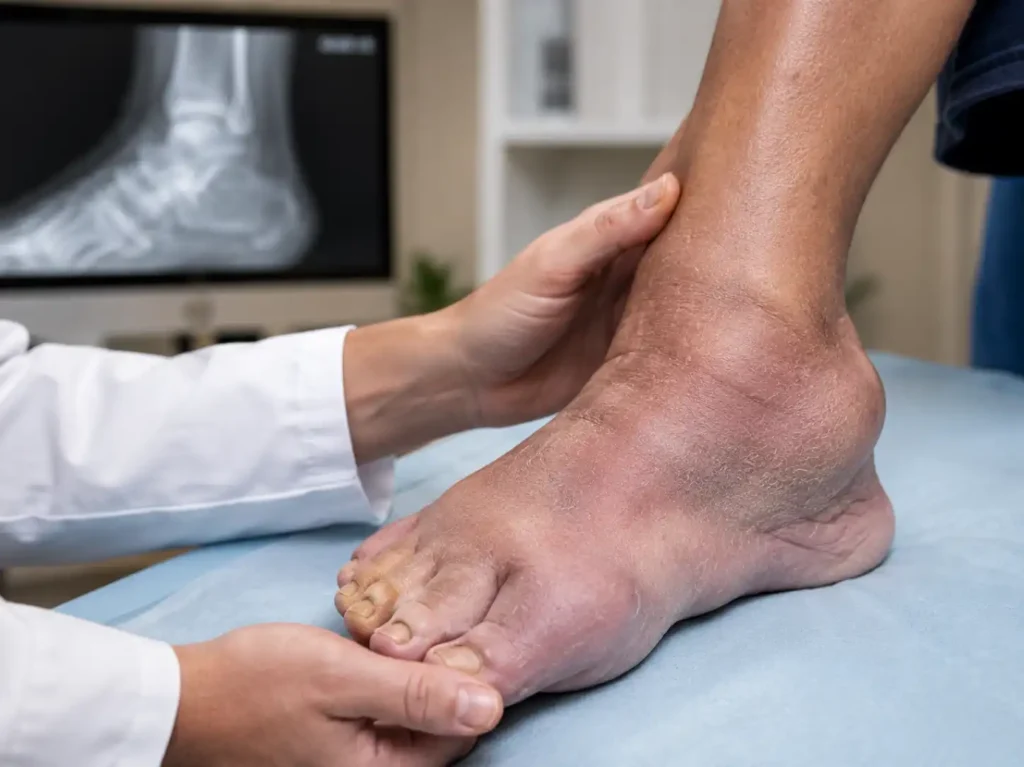
Charcot Foot
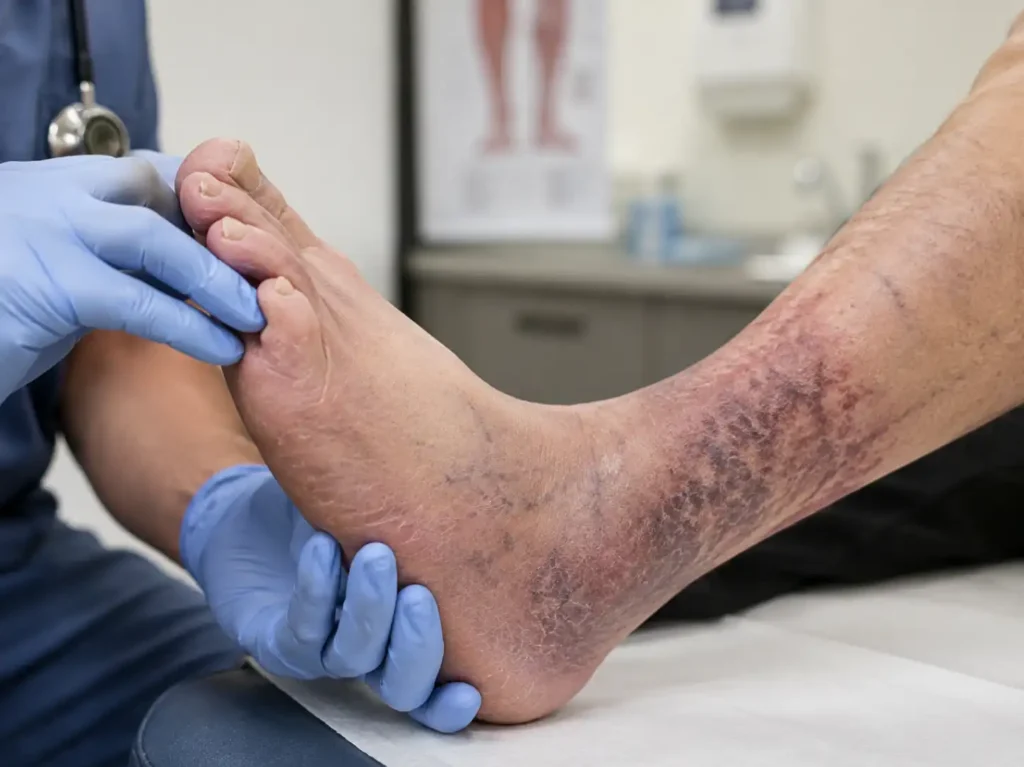
Peripheral Vascular Changes
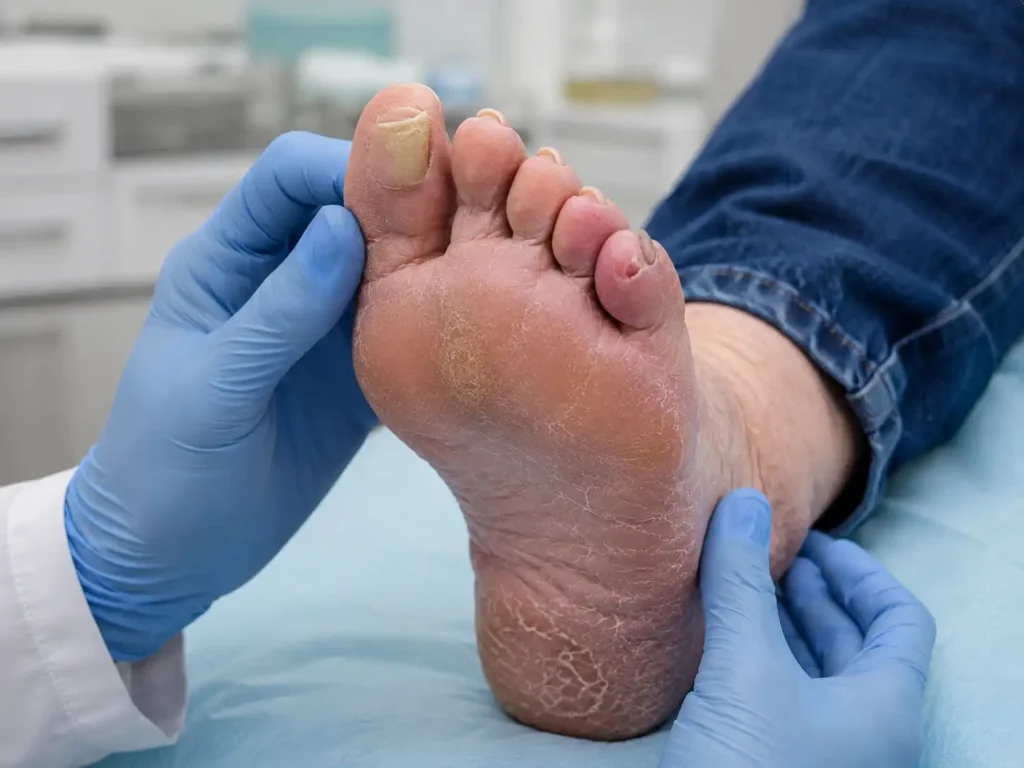
Skin & Nail Complications
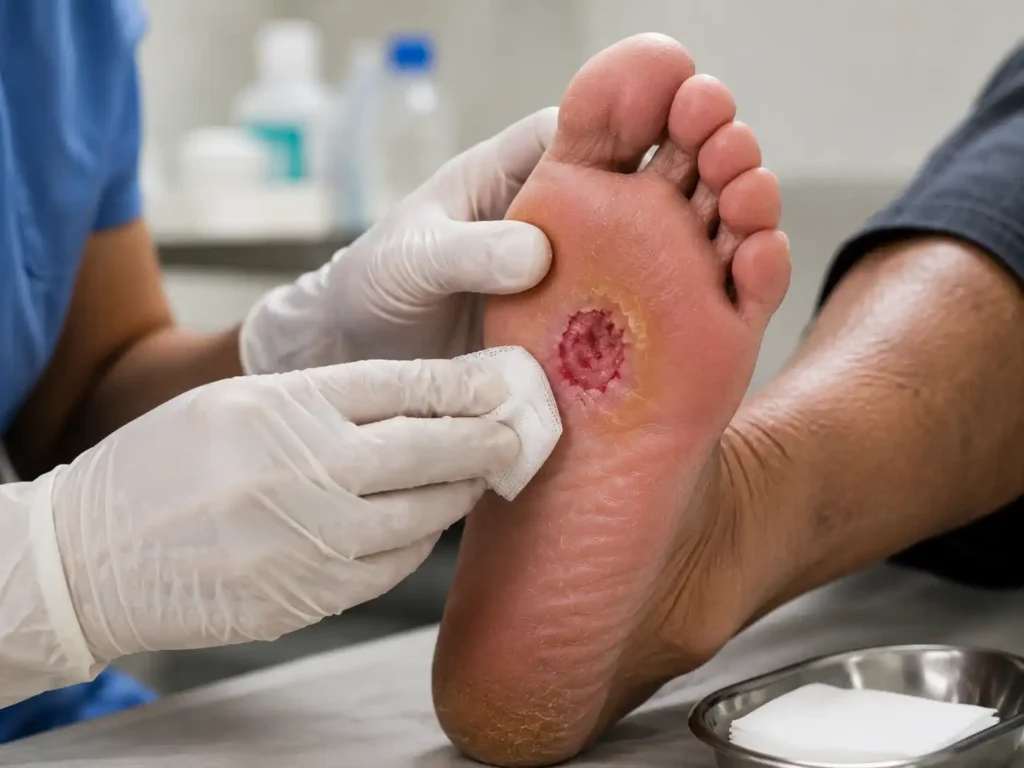
Wound Care & Infection
Diabetes and Your Feet Are Closely Linked
People with diabetes are far more likely to face lower-limb amputations than those without the disease, and the majority of those amputations are preventable. Reduced sensation means small injuries go unnoticed. Poor circulation means they don’t heal. Regular exams with a podiatrist catch problems when they’re still minor, before they become surgical or life-altering.
Watch for these warning signs and call us right away
- A cut, blister, or bruise that hasn’t improved after a few days
- Redness, warmth, or swelling around a wound
- Numbness or tingling that is getting worse
- Skin that looks discolored or has an unusual odor
- A callus with dried blood inside it

What Your Diabetic Foot Exam Includes
Circulation Assessment
We check blood flow to your feet using non-invasive vascular testing. Circulation problems are often the root cause of slow healing and recurring wounds.
Sensation Testing
We test nerve function to identify neuropathy early, before you've lost enough feeling to stop noticing injuries on your own.
Skin, Nail & Wound Review
We examine every inch of your feet for calluses, nail issues, ulcers, cracks, and any area that could become a problem if left untreated.
Personalized Treatment Plan
You leave with a clear plan, whether that means wound care, orthotics, prescription footwear, medication, or a follow-up schedule to stay ahead of complications.
What Our Patients Say
Posted on Google
 Carl Schneider
Trustindex verifies that the original source of the review is Google.
Dr. Eberly & his staff all were great! My elderly parents both loved them, and we're remarking how much better their feet felt when we were walking out to the car. Thank you, Dr. Eberly.Posted on Google E. E. BarnesFantastic staff! Dr. Is wonderful.. No wait time either... I can not say enough about them... Laura thank you for getting me in so fast.. you girls are the best.. Virginia BarnesPosted on Google
 Dar Faldyn (Mimi Dar)Dr Perez is amazing!! Compassionate and professional!! Took his time and answered all my questions. The staff is very nice. Great parking, everything was perfect!Posted on Google
 Jeffrey MareshDr. Eberly and his staff’s professionalism is a prime example of how a medical experience should be.Posted on Google
 kerri fowlerI am so glad I called and made an appointment here! The staff and doctor were so helpful and made me feel comfortable. I wish I wasn't so bad with names so I could thank everyone properly but I know that if I ever need more help with my foot I'll be coming back here!Posted on Google
 Jenni KnetlThis is my first review, but with the quality of care I received, I have to let everyone know. Everything about this office is amazing! Scheduling/billing was easy, friendly personnel, anxiety-free zone. Other medical providers should come visit here to see how patient care should be done. Highly recommend!Posted on Google
 Mick MDr. Eberly and his staff are the Best! I highly recommend him!!Posted on Google
 Jennette PeaceGreat Dr. And StaffPosted on Google
 Sheri P.
Trustindex verifies that the original source of the review is Google.
Fast and Professional Atmosphere. Will be Returning.
Serving Victoria and the Crossroads Region
Frequently Asked Questions
How often should a diabetic patient see a podiatrist? +
Most patients with diabetes should have their feet examined by a podiatrist at least once a year. Those with a history of foot ulcers, neuropathy, or circulation problems may need visits every few months. Your primary care physician or endocrinologist can also help determine the right schedule based on your overall health.
What happens during a diabetic foot exam? +
Dr. Eberly checks circulation and nerve function, examines your skin and nails for early warning signs, looks for any wounds or pressure points, and reviews your footwear. The goal is to catch small problems before they turn into large ones. Most exams take 30 to 45 minutes and you'll leave with a clear picture of where your foot health stands.
Does Victoria Foot & Ankle accept insurance for diabetic foot care? +
Yes. We are in-network with United Healthcare and accept a range of other insurance plans. Call our office at 361-576-3338 to confirm your specific coverage before scheduling.
What are the early warning signs of a diabetic foot problem? +
Numbness or tingling, cold feet, slow-healing cuts or blisters, redness or swelling, thick or discolored toenails, and calluses with dark spots inside are all signs worth taking seriously. If you notice any of these, schedule an appointment rather than waiting for your next routine visit.
Can you treat diabetic foot wounds at Victoria Foot & Ankle? +
Yes. Dr. Eberly provides wound evaluation and care for diabetic foot ulcers and infections. If a wound has not begun to heal within a few days, that is a medical situation that needs professional attention. Early treatment significantly reduces the risk of infection spreading or requiring surgical intervention.
What is Charcot foot and how is it treated? +
Charcot foot is a condition where the bones of the foot weaken and fracture due to neuropathy, sometimes without causing noticeable pain. The foot can change shape significantly if not treated early. Treatment typically involves offloading pressure with a cast or specialized boot, and in some cases surgery. Catching it early makes a major difference in outcome.