
Bunion Treatment in Victoria, TX
A bunion is a change in alignment at the base of the big toe that creates a prominent bump and may cause pain in shoes or while walking. At Victoria Foot & Ankle Center, Dr. Matthew Eberly evaluates bunions and discusses nonsurgical care and surgical options when appropriate.
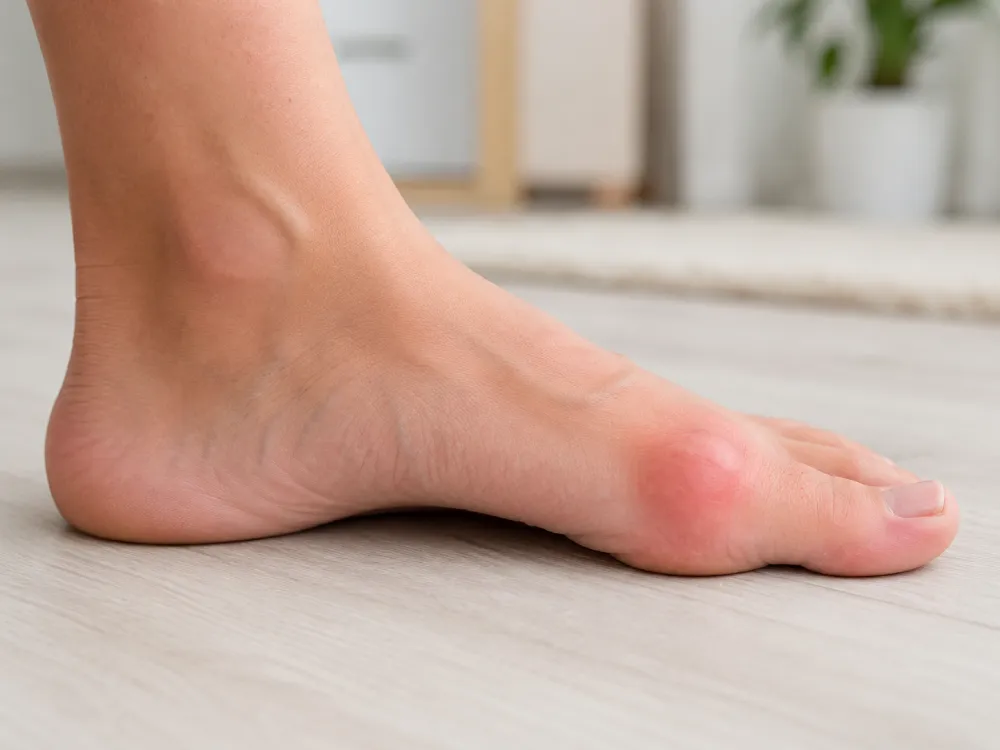
How to tell if it is a bunion
- A bump on the inside edge of your foot
- Redness or swelling over the joint
- Skin that is sore, thick, or shiny from rubbing
- A big toe that angles toward the second toe
- Pain that is worse in narrow shoes and eases when you are barefoot
- A corn or callus where the first and second toes press together
What causes bunions
Inherited foot structure and mechanics can contribute to bunions. Shoes that crowd the toes can increase pressure and worsen symptoms. The factors involved vary, so an examination helps identify what is contributing to your discomfort.
Bunions do not go away on their own. Padding, shoe changes, toe spacers, or splints may help symptoms for some people, but they do not reverse the alignment change.
Some people with flat feet or other foot mechanics may have more pressure at the big toe joint. The relationship varies, so Dr. Eberly evaluates your foot structure before recommending care.


How Dr. Eberly diagnoses a bunion
Weight-bearing X-rays may be used to assess bone alignment and the condition of the joint.
Treatment
- Roomier shoes. A wider, deeper toe box can take pressure off the joint.
- Shoe inserts or orthotics may be considered to improve support or redistribute pressure. The choice depends on your examination and symptoms.
- Padding over the bump to reduce rubbing that makes the skin sore.
- Medication for pain or inflammation may be appropriate after a review of your health history and other medicines.
- A corticosteroid injection may be considered for selected patients when joint inflammation is contributing to symptoms.
These measures may reduce discomfort, but they do not reverse the bunion’s alignment. Surgery is not necessary for everyone.
Surgery may be considered when pain continues to limit daily activities despite nonsurgical treatment. The procedure depends on the alignment, joint condition, and your goals. Dr. Eberly can explain whether a minimally invasive bunion surgery approach is suitable and discuss benefits, risks, and alternatives.


What recovery looks like
Swelling can persist during recovery, but new or worsening symptoms should be discussed with your surgical team. Follow your individual instructions for weight-bearing, wound care, and returning to shoes and activities.
When to see a podiatrist
- The joint hurts most days
- You have given up shoes you used to wear
- The big toe is getting stiff
- The skin over the bump is raw or broken
- The toe is drifting further each year
- You have diabetes or poor circulation, in which case any rubbing spot needs an early look

Book an appointment
Call 361-576-3338 (FEET) or use our online appointment request form.
Victoria Foot & Ankle Center is at 2700 Hospital Dr, Building A, Suite 101 in Victoria, TX. We see patients from Cuero, Port Lavaca, Goliad, Edna, Beeville, and across the Crossroads.